
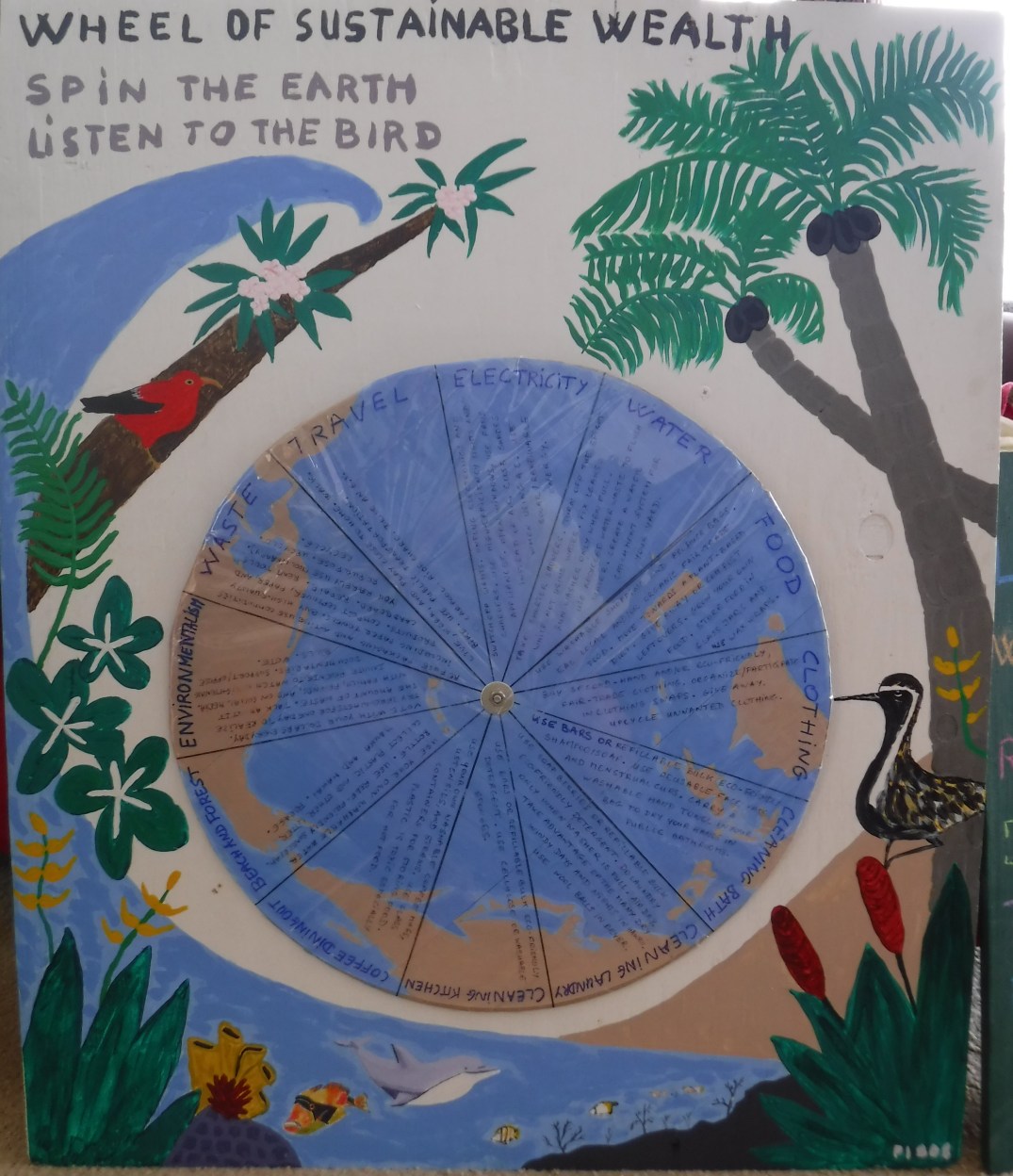
The wheel presents the different steps to take to reduce your carbon footprint breaking it down into 12 categories:
- Cleaning Bath: Use bars or refillable bulk eco-friendly shampoo/soap. Use reusable face pads and menstrual cups. Carry a washable hand towel in your bag to dry your hands in public bathrooms.
- Cleaning Laundry: Use soap berries or refillable bulk of eco-friendly detergent. Do laundry only when washer full. Air dry. Take advantage of the many dry windy days and nights in Hawaii. Use wool balls in dryer.
- Cleaning Kitchen: Use dish bar or refillable bulk eco-friendly detergent. Use cellulose or washable sponges.
- Coffee – Dining out: Use your own washable coffee mugs, utensils and straws. Use glass containers for storing food. Plastic is toxic especially for hot food.
- Beach and Forest: Use your own washable water bottle. Use reef-friendly sunscreen. Collect plastic and other litter mauka and makai. Forage.
- Social Environmentalism: Vote with your dollars. Try zero-waste for one day to realize the mount of waste. Talk about it with your friends and on social media. Invite friends to watch enlightening documentaries. Support/oppose bills. Vote.
- Waste: Refuse packaging and 1-time use commodities including paper towels. Buy high-quality products. Compost leftover, paper, and cardboard. Repair. Rent tools you rarely use (tool library). Repurpose. Upcycle. Recycle.
- Travel: Live, work, and play close to home. Walk. Bike. Use public transportation. Carpool. Rideshare. Drive an EV.
- Electricity: Switch off lights. Unplug electronics and chargers. Use high-efficiency lights and appliances. Open windows, use fans instead of A.C. Close shades when using A.C. Use solar/renewable energy.
- Water: Take shorter showers. Turn off the spigot while not using water. Fix leaks. Run washer only when full. Use recycled water waste to flush toilet. Create a water catchment system for your yard.
- Food: Use washable shopping and produce bags. Eat local and/or organic, fair-trade food. Move towards a plant-based diet. Give away or compost leftovers. Grow your own food. Store food in glass jars and wax wraps.
- Clothing: Buy second-hand and/or eco-friendly, fair-trade clothing. Organize/participate in clothing swaps. Give away. Upcycle unwanted clothing.
 Positive Impact 808